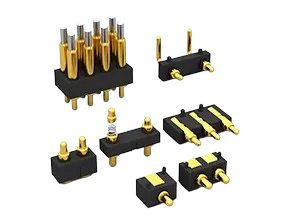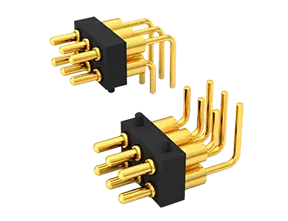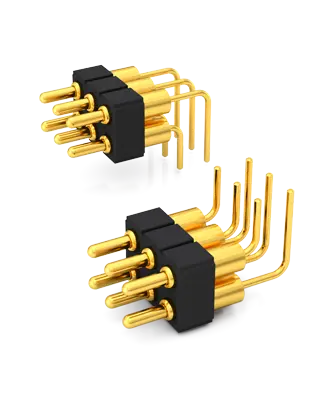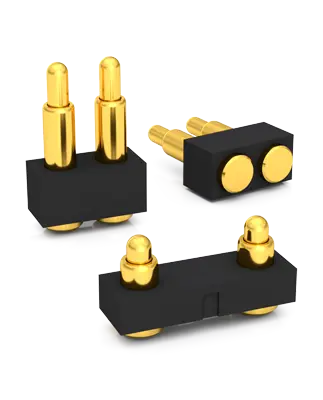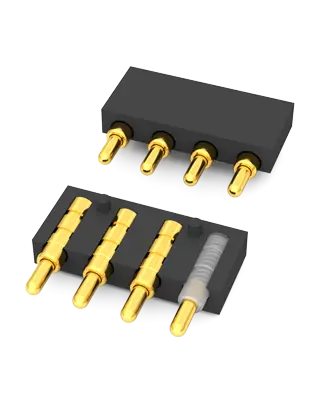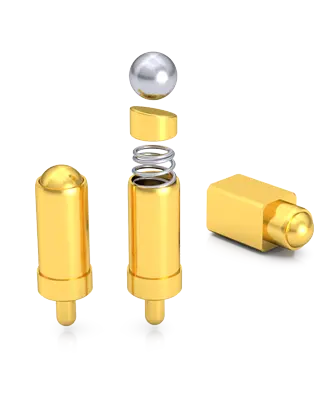


Pogo pin is also called a spring pin. The simplest pogo pin structure is composed of three parts: pin (Plunger), tube (Tube), and spring (Spring). The needle and tube of the pogo pin are generally made of brass. In special cases, stainless steel is also used. The material of the spring is stainless steel.
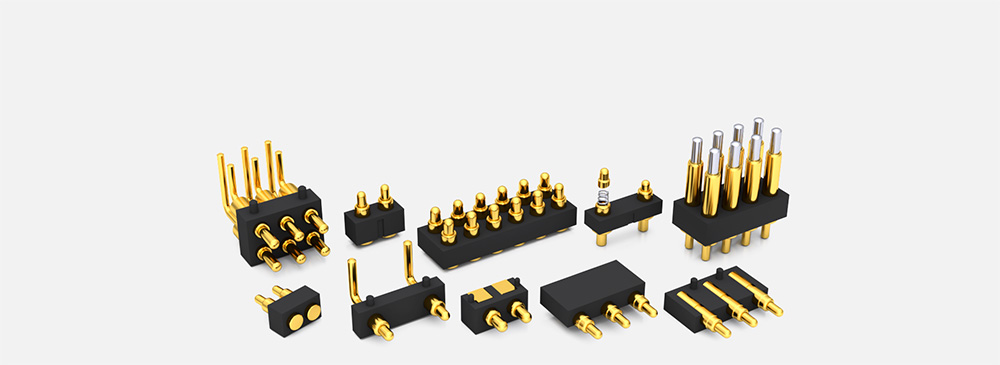
The working principle of a pogo pin is based on its internal spring mechanism, which ensures a continuous and reliable electrical connection even under vibration or movement. Unlike static connectors, pogo pins use dynamic pressure to maintain contact.
1. The Compression Cycle
When a Pogo Pin is engaged with a contact surface (such as a PCB pad or a battery terminal), the process follows three key stages:
Initial State: The spring is at its "Free Length," and the plunger is extended to its maximum height. No electrical path is yet formed.
Compression Phase: As the mating component presses down, the Plunger slides into the Tube, compressing the internal Spring. This creates a predetermined "Spring Force."
Working Position: The pin reaches its optimal "Working Height." At this point, the spring force ensures the plunger tip is pressed firmly against the contact pad, creating a low-resistance electrical path.
2. The Internal Contact Strategy
To ensure stable current flow, Rtench Pogo Pins utilize advanced internal designs to prevent the spring from carrying the main current (as springs have high resistance):
Back Drill Design: The plunger has a hollow tail to increase space for a longer spring, allowing for a stable force in a short pin.
Bias Tail Design (High Stability): The end of the plunger is cut at an angle (slanted). This ensures the plunger is always in lateral contact with the inner wall of the tube, providing a stable "short-circuit" path for the current and preventing signal flickering.
Steel Ball Structure: For high-current requirements, a precision steel ball is placed inside the tube to increase the contact area and reduce electrical resistance further.
The main function of pogo pin is electrical connection. It is generally used to transmit current or signals. It is used in a wide range of applications, ranging from space shuttles and high-speed rails to smart watches and Bluetooth headsets.
Bluetooth application: What are the characteristics of the pogo pin connector when used on Bluetooth headsets?
Small size: Wearable devices are focused on small size, so the pogo pin charging pin contacts used on Bluetooth headsets require very small size.
Anti-oxidation corrosion: Most sports enthusiasts like to listen to music while doing exercise. Because human body sweat is corrosive, this requires the charging contacts of Bluetooth headsets to be anti-oxidation corrosion to ensure that the pogo pin charging contacts are The points are not corroded by human sweat and do not affect the functionality of the Bluetooth headset.
Be waterproof: Accidental falling into the water and sudden rain are inevitable. At this time, the Bluetooth headset needs to be waterproof. As the charging contact is the only point of connection with the outside world, it needs to be well waterproofed in terms of technology.
Movable connection, convenient for disassembly. It is very suitable for some contact connections that require routine disassembly. It is generally used for charging connections, such as the connection between the charging compartment of TWS Bluetooth headsets and the headset contacts.
Structural advantages. As a leading and experienced pogo pin supplier, Rtench's Pogo pin can be very small in size and can be used in products with limited space. Especially with today's trend of miniaturization of electronic products, pogo pin can take advantage of this advantage.
Long life, the dynamic service life of pogo pin can be up to 500,000 times, which can be used in products that require frequent plugging and unplugging, such as shared power bank.
For large current, the pogo pin can achieve a current cutoff design of greater than 10A, which can meet the needs of products with large current requirements, such as charging connections for electric bicycles.
High-frequency applications, pogo pins can be designed for high-frequency application scenarios up to 10Gbps, such as pogo pins in Huawei communication base stations.
Low inductance. The pogo pin has a simple structure and a short connection path, so its inductance value is very small. It can be used in some application scenarios that have special requirements for inductors. Pogo pin is a good choice.
While both Pogo pins and leaf springs (stamped contacts) provide electrical connections, they differ significantly in terms of space efficiency, durability, and signal stability.
| Feature | Pogo Pin Connectors | Traditional Leaf Springs |
| Space Efficiency | High. Vertical compression saves valuable PCB real estate. | Low. Requires horizontal space for bending and contact movement. |
| Durability | Up to 500,000 cycles. High spring endurance for frequent docking. | Low. Material fatigue occurs quickly; usually < 5,000 cycles. |
| Current Handling | Excellent (Up to 30A+). Stable contact point allows high current. | Limited. Thin metal arms may overheat at high current. |
| Vibration Resistance | Superior. Internal spring maintains constant pressure during movement. | Weak. Vibration often causes temporary signal interruption (chatter). |
| Design Flexibility | Very High. Available in various heights, strokes, and SMD/DIP styles. | Limited. Shape is fixed by the stamping mold. |
| Working Direction | Vertical (Z-axis). Ideal for pop-up or docking actions. | Horizontal/Lateral. Requires a sliding motion to connect. |
Vertical Stroke Advantage: Pogo pins work along the Z-axis, meaning they can be compressed directly downwards. This is why they are the standard for TWS earbuds and smartwatch charging docks, where space is at a premium.
Stable Contact Resistance: Unlike leaf springs that can lose their "springiness" over time due to metal fatigue, a high-quality Pogo pin maintains a consistent Contact Force, ensuring low and stable resistance throughout the product's lifespan.
High-Speed Data & RF: For high-frequency applications, the short electrical path of a Pogo pin minimizes inductance, making it a better choice for antenna connections and high-speed signal transmission.
Pogo pins work through an internal spring mechanism. When a mating component (like a charging case or PCB) applies pressure to the plunger, it compresses the spring inside the hollow tube. This compression creates a continuous spring force that ensures a stable, low-resistance electrical connection between the tip of the pin and the contact pad.
Pogo pin connectors offer several key advantages over traditional connectors:
High Durability: Capable of withstanding 100,000 to 500,000 mating cycles.
Space Saving: Their vertical compression design allows for a smaller footprint on the PCB.
Vibration Resistance: The internal spring maintains constant contact even in high-vibration environments like automotive or industrial machinery.
Tolerance Absorption: They can compensate for mechanical misalignments and manufacturing tolerances between two surfaces.
Pogo Pin Connectors Related News